
WebP compressor — free online tool
Compress WebP at quality 78 by default and keep transparency. JPG and PNG dropped in are re-encoded as WebP; a larger result returns your original.
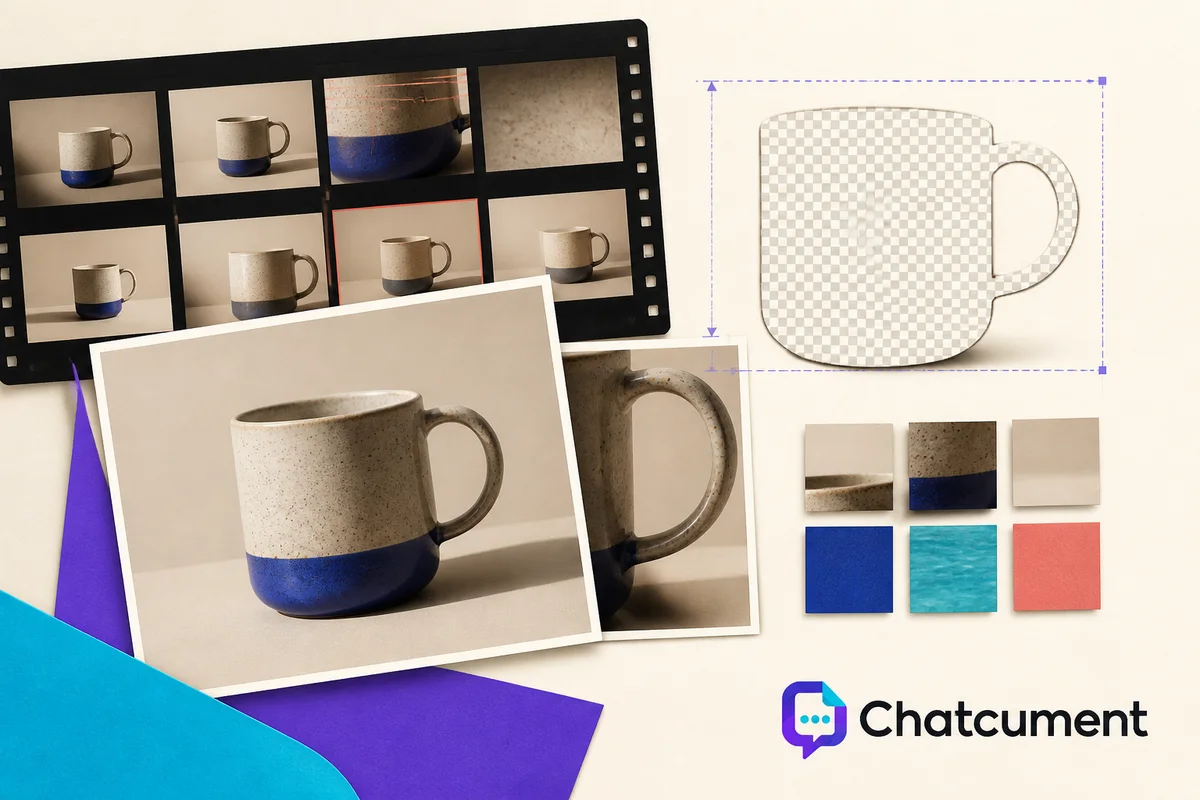
Compress images
Control quality, size, and format in one batch.
What to know
WebP was designed to beat JPG and PNG on size, and a lossy WebP at a given quality is usually smaller than a JPG of similar appearance. The slider here runs from 20 to 95 and starts at 78. Because WebP also supports transparency, a logo with a soft shadow keeps its alpha channel when compressed, which a JPG could never do.
The page locks the output to WebP. Drop in a JPG or PNG and it is decoded, redrawn and saved as WebP, so the page doubles as a quick way to move a folder of photos to a lighter format. A transparent PNG stays transparent after the move.
Do not assume that every WebP gets smaller. Files exported from design tools are often saved at modest quality already, and encoding them again at 78 can come out heavier. When the new file is not smaller at identical dimensions, the tool returns your original untouched, so nothing gets worse. Lowering the slider or ticking Resize before compressing are the next levers.
WebP encoding relies on the browser. A browser that cannot write WebP from a canvas reports the failure rather than saving a different format under a WebP name. Current Chrome, Edge, Firefox and Safari cope with it.
Choose a specific task 18
Related tools 13
How to use WebP compressor — free online tool
- Drop WebP files, or JPG and PNG files you want to convert, into the page; output is locked to WebP.
- Keep Quality at 78 to start, and lower it by 5 to 10 if the total is still too big.
- For huge sources, tick Resize before compressing and set a width such as 1920 px.
- Run it, compare each size with the original, and download the WebP files.
Quick answers
How does WebP compare with JPG at the same quality number?
The two scales are not identical, but a lossy WebP at 75 to 80 typically looks comparable to a JPG at a higher setting while being smaller. Check the preview rather than trusting the number.
Does a transparent WebP stay transparent after compression?
Yes. The alpha channel is redrawn with the image and written back into the WebP.
Why did I get my original WebP back?
Re-encoding at your chosen quality would not have made the file smaller at the same dimensions, so the original was kept as the better result.
Can I use the result on any website?
WebP is supported by all current major browsers. Very old browsers and some email clients still fail to display it, so keep a JPG fallback there.